When Houssein Rayaleh received a WhatsApp message from a local ecotourism guide showing footage of a lioness in Djibouti, he was excited. The video showed the big cat running directly in front of a moving vehicle along Route Nationale 11, a road that Rayaleh knows well.
This was shocking. Lions are officially extinct here: There are no records of Panthera leo in this Horn of Africa country.
“I said whoa, we have a lion in Djibouti,” says Rayaleh, the CEO and founder of the NGO Djibouti Nature.
So he forwarded the video on to the Cat Specialist Group at the IUCN, the global wildlife conservation authority.
“As it happened, it was a fake,” Rayaleh says.
Certain details spring out in the video identifying it as an AI-generated video, says Urs Breitenmoser, co-chair of the group. “The lion behaves very strangely and there are also a few sequences where you can actually see that it is morphologically not quite correct.”
Luke Hunter, executive director of the Wildlife Conservation Society’s big cats program, described the video as “obviously very fake” after viewing it.
But to the untrained eye, these details are nearly impossible to spot, and some damage may already be done, Rayaleh says. It may have spread far and wide across the country via WhatsApp and social media channels. He received messages, including questions from government officials, asking if the video was authentic.
He says his concern now is that local people who saw the video might be spooked, as the region is home to farmers who already face human-wildlife conflict with leopards, spotted hyenas and African golden wolves. “Even if the lion is not occurring there, it is a threat for the other carnivores,” Rayaleh says, as it could cause persecution of these other predators.
Rayaleh says he doesn’t know who made the video, but suspects it was a genuine clip doctored using artificial intelligence to stitch in a lion. “The person who filmed this probably saw a goat on the road or a jackal and then they transformed it to a lion,” he says.
Fake imagery of wildlife isn’t anything new, Breitenmoser says. He recalls the case of the South China tiger back in 2008, when a clearly fabricated image was used to prove its alleged presence in Shaanxi province. “In the past these sorts of fakes were relatively easy to detect, he says. “Now, with artificial intelligence, it is getting more and more difficult.”

Skimming through social media, AI-generated images and videos of wildlife are ubiquitous. Technology is advancing rapidly, making it more challenging to identify a fake from the real thing.
That’s raising all manner of concerns among conservationists and wildlife experts. AI images of false animal sightings or attacks can create fear and spark panic or violence towards animals. Fake images spread misinformation about animal behavior, and fake footage or photos of people playing with or cuddling wild animals can feed demand for the exotic pet trade, endangering already threatened species.
A spate of fakes
Djibouti’s fake lion sighting may have made the rounds on national social media, but it didn’t grab headlines elsewhere. That’s not been the case in other places. Other high-profile fake videos have circulated worldwide — and sparked controversy.
The impact of these computer-generated photos and videos range in severity from the seemingly cute or humorous variety — like a squirrel eating noodles — which misleads the public about animal behavior — to far more problematic instances that fuel wildlife conflict, says José Guerrero-Casado, a zoologist at the University of Córdoba, Spain. He authored a paper last year outlining how these AI-generated images pose a direct threat to conservation efforts by distorting public perceptions of wildlife.
“A lot of these videos created by artificial intelligence show animal behavior like that of humans or behavior like a pet,” Guerrero-Casado says.
For example, a viral video purports to show an elephant wading into a fast-flowing river in Indonesia to save a tiger. It was a fake that included the wrong subspecies: The tiger portrayed wasn’t a Sumatran tiger, says Christine Breitenmoser-Würsten, co-chair of the IUCN’s Cat Specialist Group.
“This could be dangerous, because we need a society to be well informed to implement conservation actions. They need to know how the species … behave.”
Other videos are even more problematic, such as a spate of “wildlife attack” videos online showing animals attacking domestic pets or even children.
Guerrero-Casado highlights a fake video that showed a male lion leaping over a fence to carry off a dog. Echoing Rayaleh’s concerns about the lion video in Djibouti, he says people may believe these videos are real, with serious consequences.
Last year saw numerous AI-generated videos of big cats in India. One showed a leopard in a Mumbai shopping mall. A series of leopard “sightings” in the city of Lucknow turned out to be fabricated.
A regional forestry department released a warning about sharing AI-generated images after fake photographs of a leopard sparked panic among local people in Bavdhan, in Maharashtra state.
“Such visuals create confusion and disturb public peace,” The Times of India reported, by misleading the public and generating fear, as well as diverting resources for boondoggle investigations. A forest department official noted that this is a prosecutable offense under India’s national cyber laws.https://www.youtube.com/embed/G1un4wJzBQk
AI-generated video of a leopard inside a mall in Mumbai, India.
Another video showed a leopard chasing a train and hauling a passenger off. When a forest officer from Sanjay Dubri Tiger Reserve debunked the video, he noted that a leopard couldn’t run fast enough to catch a moving train.
In an even more troubling instance, a fake video styled as CCTV footage showed a tiger attacking and dragging off a man in India. A similar video showing a tiger attack in Russia resulted in an arrest: The creator was charged with deliberately distributing misleading content that could provoke public alarm and faces a fine of up to 100,000 rubles (about $1,300).
Exacerbating conservation challenges
Such videos can clearly have a detrimental impact on people’s perceptions of carnivores, says Yadvendradev Jhala, a senior scientist with the Indian National Science Academy. “It is the perception of the conflict which is exacerbated, not the conflict itself,” he says.
This trend is particularly concerning as tiger populations are rebounding in India. “Our tigers, as they increase, come into more conflict with humans,” he says. “Negative propaganda using AI images is not helpful at all in maintaining their image as a charismatic carnivore that should be kept alive.”
It could ultimately put conservation successes at risk, he says, if conflict cases increase. Other experts add that responding to these incidents waste authorities’ time and resources. Thus far, it’s unclear if direct animal persecution has occurred because of fake videos, but with the growing prevalence of AI-generated imagery it’s raising the risk says Guerrero-Casado.
Conversely, fake videos could eventually desensitize people to the severity of human-wildlife conflict, says Dana Wilson, director of marketing and communications at Wildlife SOS, an Indian conservation nonprofit. His organization regularly rescues animals, including tigers and leopards, from conflict situations. He says he’s particularly concerned that many AI videos incorporate real footage — including stolen clips from his organization’s own rescues — making it even more difficult to spot the fakes.
Conservationists warn that these videos can also spark consumer interest for rare wild animals as well as their parts and products. Research has shown that social media can increase demand for wildlife and normalize ownership of exotic pets that are often pulled from the wild and don’t survive well in captivity. Wildlife traffickers use platforms including Facebook and TikTok to advertise and sell illegal wildlife products across the world.
A rise in AI-generated images and videos of wild animals in domestic settings could add to that problem and are a “major concern,” says Pauline Verheij, a wildlife crime specialist with EcoJust.

“In general, the volume of videos and photos of influencers flaunting their cute or really dangerous wild animals on social media is a problem for wildlife trafficking,” she adds. “Now with the proliferation of AI-generated images, I would say that this is really pushing that trend even further in a direction we don’t want it to go.”
Vincent Nijman, a wildlife trade expert and director of EcoVerde Global Consulting, an environmental consultancy, agrees that this is a real concern. “There is the danger that people see animals that are clearly not suitable to be kept as pets in situations that make it appear that they are good companions,” he tells Mongabay by email. “Normalizing animals as exotic pets is also a potential risk.”
Meanwhile, AI use by wildlife charities and conservation organizations is also stirring controversy. In a recent case in Japan, a conservation NGO had to retract an AI-enhanced video of a raccoon dog carrying a baby sea turtle. Some ecotourism and safari operators are also using AI-altered images and video to promote their tours.
“I’ve spent my entire career telling conservation stories, and it’s incredibly important to depict reality,” says Sebastian Kennerkneckt, a wildlife photographer. He highlights a viral video of a tiger sniffing a tourist as one example of how such content can create a “false reality” of wildlife encounters. These kinds of interactions can be dangerous to people and wildlife.
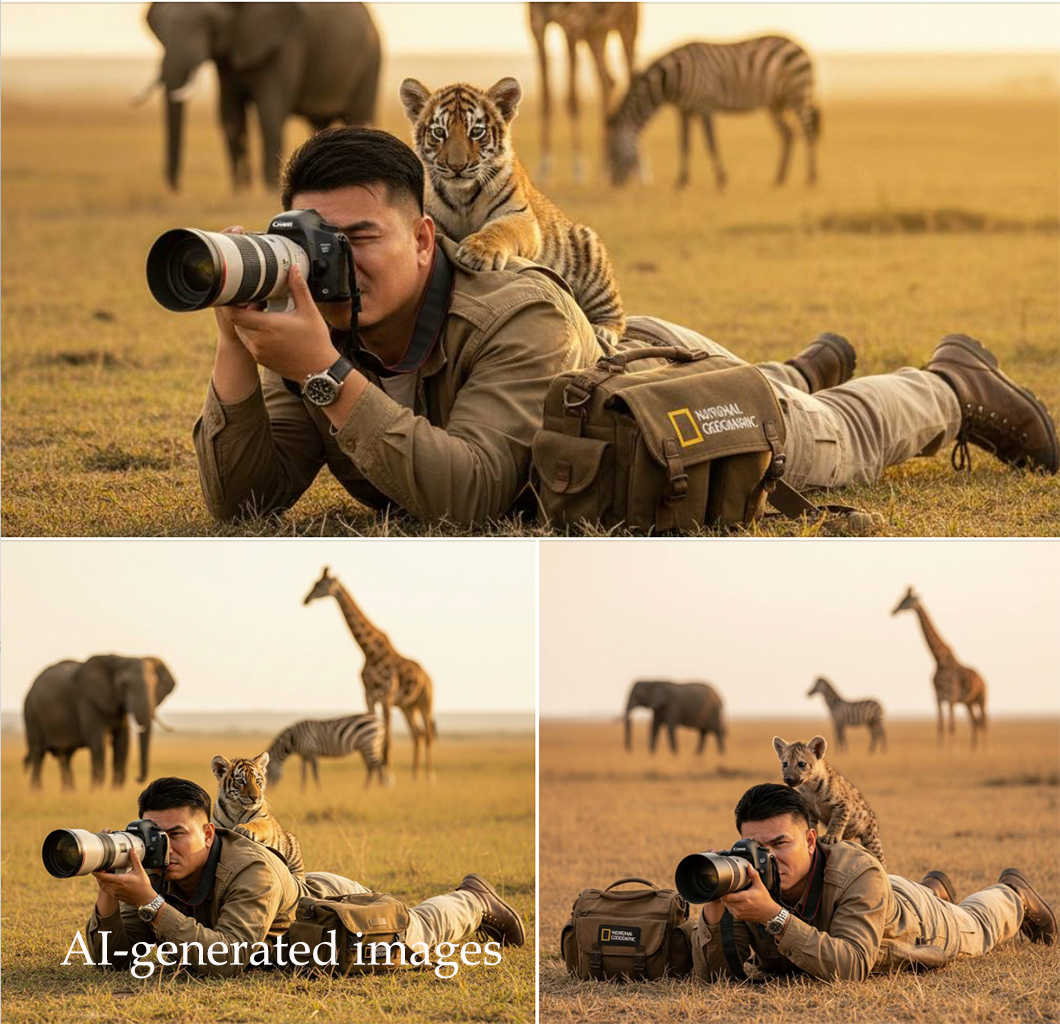
“Unless you’re aware of the behavior and ecology of the animals, which most people aren’t — and that’s not their fault — you believe it,” he says.
U.K. conservation organization the Mammal Society decided early on to take a stance against using AI imagery, which it calls “a ticking time bomb” that ultimately undermines trust in conservation-focused NGOs that use them. Hence, says CEO Matt Larsen-Daw, all nature-focused organizations should agree not to use it to create visual content.
For conservation to work, people need to have accurate information on how species behave, he says. “The lack of understanding of nature in large subsections of society is really worrying, and it will cause greater and greater problems as we try and solve the biodiversity crisis. Anything that fuels that is a problem.”
By distorting reality, it could also become a concern for NGO fundraising, says Wilson at Wildlife SOS, by reducing the value and impact of real content as people are bombarded with “spectacular” fakes.
WCS’s Hunter echoes the numerous conservation concerns swirling around AI-generated content. “I’ve been blown away by how convincing some of this material is (and equally, appalled by how bad it can be),” he says in an email. But he adds there could also be a benefit as it might improve how people scrutinize online content and fact-check what they see.
AI is revolutionizing conservation
Experts also underline that amid this wave of fancified and false wildlife content, artificial Intelligence is also benefitting conservation and wildlife research. AI tools are helping monitor forests, track wildlife, identify poaching hotspots and more.
This fast-moving AI revolution is quickly changing the fields of conservation and biology. Guerrero-Casado and his team at the University of Córdoba use AI, for example, to quickly sift through hundreds and thousands of camera trap images, which reduces the workload on researchers and speeds up analysis. “Artificial intelligence is changing everything, and there are a lot of positives for conservation biology,” he says. “But there are also a lot of concerns.”
That includes intensive use of water and energy: The drive to build ever more AI data centers is consuming vast amounts of resources, while churning out substantial greenhouse gas emissions and creating an enormous environmental footprint.

This revolution is also driving a shift in conservation funding to AI-based solutions at the expense of “traditional” methods, with concerns that increasing desk-based work is leading researchers to lose touch with nature.
Real or fake?
Addressing the growing problem of fake wildlife videos won’t be easy, experts say, and there’s no quick fix because the technology is so easily accessible. For a start, social media platforms should automatically identify and label content that’s created by artificial intelligence, Guerrero-Casado says. Experts also urge caution for anyone who comes across visual content they believe may be manipulated and shouldn’t share anything they believe isn’t real.
The advent of AI-generated images and videos is already blurring the line between what is real and fake. Over the past decades, camera trapping revolutionized conservation and wildlife research; motion-sensor trailcams allow researchers to peer into ecosystems and deepen their understanding of nature. That’s particularly true for elusive and hard-to-spot wild cat species, says Breitenmoser from the IUCN Cat Specialist Group.
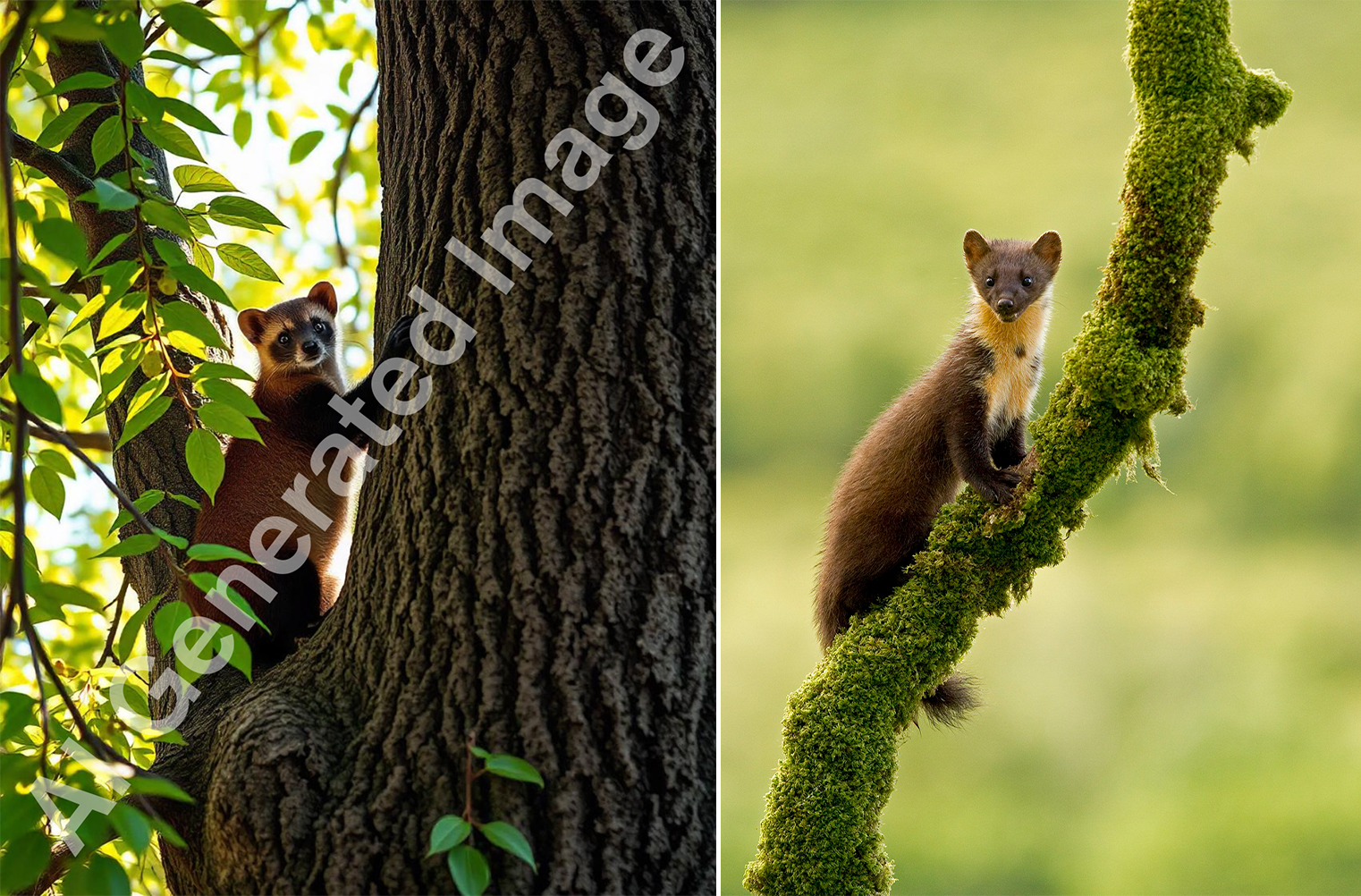
But fake AI imagery is putting all the advantages of camera trapping into question, Breitenmoser says, as fake images can easily be generated. That means caution is necessary and new strategies and tools will be needed when assessing purported evidence of the distribution, location or supposed reappearance of wildlife in a country — like the lion in Djibouti. A camera-trap photo or video may not be enough.
AI technology is often described as a game changer for multiple fields, including conservation. However, the widespread sharing of AI-generated content can be a problem, experts say, with thousands if not millions of views. With rapid improvement in technology and quality, these videos and images are only likely to become more prevalent, heightening concerns.
“AI is fantastic when it’s used in a good way,” says Rayaleh from Djibouti Nature, “but if we use it in a bad way, it can undermine science, conservation and public trust … This can compromise the work of conservationists not only in Djibouti, but elsewhere, too.”
Banner image: This is an AI-generated photo of a puma. Image by Lindell Dillon via Flickr (CC BY-NC 2.0).
This article was originally published at Mongabay.com
 Sean Mowbray