Guiña are small-forest-dwelling felids found in Chile and Argentina that are distinguished only by small, subtle black dots, making it difficult to tell one cat from another. A change in camera trap angle could open the door to a better understanding of their populations, with important conservation implications, a recent study says.
Normally, researchers place camera traps at ground level to snap pictures of cats as they walk by. But telling one guiña (Leopardus guigna) from another from that angle proved incredibly challenging.
“One of the fundamental questions in ecology is always how many individuals are there or what are the densities,” Nicholas Galvez, an associate professor at the Pontifical Catholic University of Chile, told Mongabay in an interview. “Sometimes that sounds like a very easy question, but it’s actually really difficult to answer in the field, especially with a species so small and cryptic.”
To solve that problem, Galvez and his team switched their cameras to point downward, in a “zenith” position, attaching them to tree branches and poles in a temperate forest in Chile’s Reñihué Valley, in northern Patagonia. That switch enabled the scientists to identify 12 individuals based on their unique markings on their backs. The findings were published in the journal Oryx.
Ilaria Agostini, a researcher with Argentina’s National Scientific and Technical Research Council, said it’s exciting research. “For the first time, it seems feasible to identify individuals in this very subtly marked cat,” she said in a video interview. When using camera traps for her own research on guiñas in Argentina, Agostini wasn’t able to identify individual animals using lateral views.
This technique, the researchers say, could have important conservation implications.
Until 2025, when the IUCN reclassified the species as of least concern, the guiña was listed as vulnerable. The change in status was not without controversy, as three of the six recognized subpopulations (those in Argentina, central and northern Chile) remain highly threatened. Part of the concern among some conservationists was the lack of data on those threatened populations. But this technique could, in time, change that.
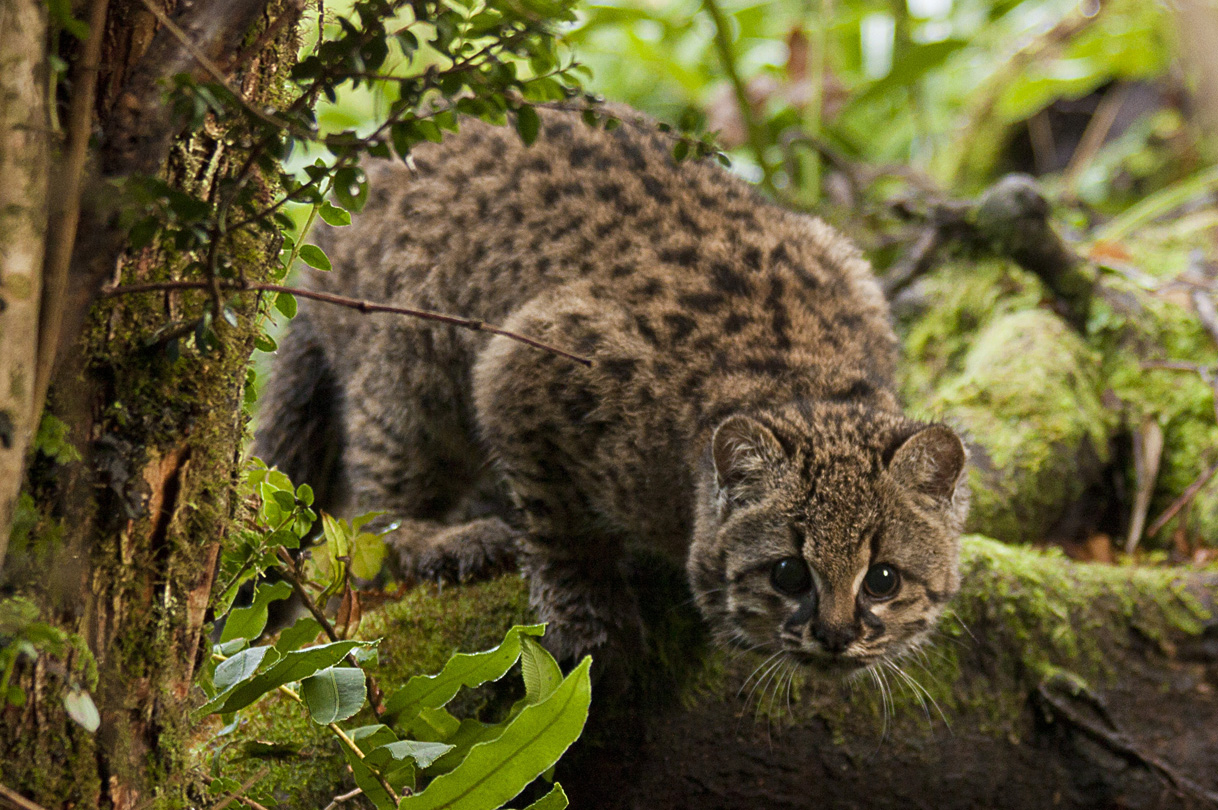
Omar Ohrens, a conservation scientist for Panthera, described it as “potentially transformative” in that regard, adding it still needs further testing before wider adoption. “There is currently a striking absence of reliable population estimates for this species across its range, making this work very timely,” he wrote in an email.
Spots from above
For Galvez, this study is a first step showing that identifying individual guiña is possible with camera traps. But it’s not without challenges.
During their trial, more than half of the 1,386 camera trap photos taken in the zenith position were excluded as the guiña photographed were melanistic, having a genetic mutation that results in black fur, while the other images were of poor quality. So, it wasn’t possible to examine the unique black spots in those images. Overall, 350 images had visible spots and were assessed in the trial, from which the team identified 12 individual guiña.
Identifying melanistic cats will likely continue to be problematic when using this technique, Galvez said. It could pose a problem conducting studies in areas where this morph is more prevalent. He said this could be overcome by using a white flash on the cameras, rather than the infrared one used in their study.
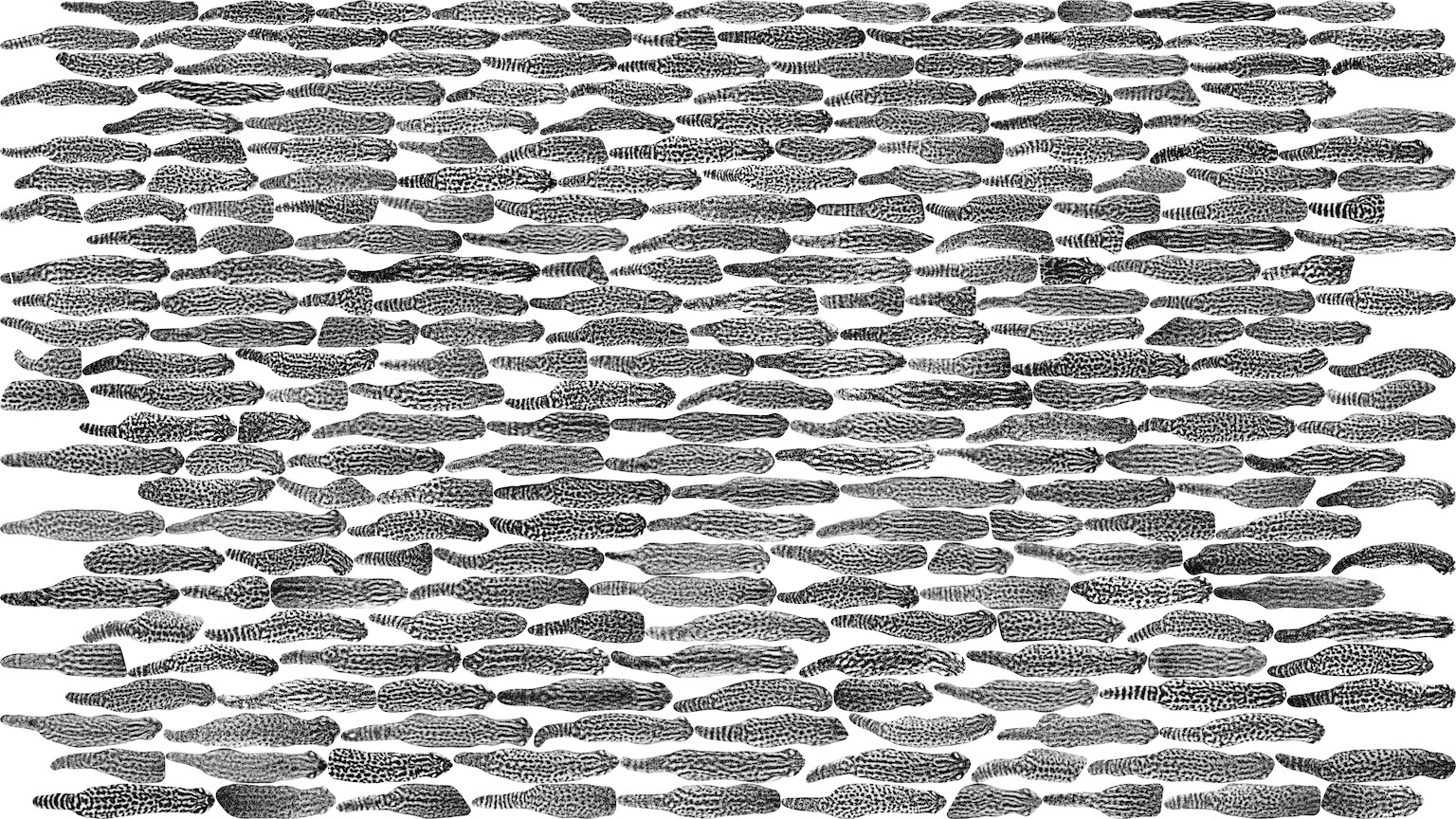
“Maybe that gives you enough illumination to bring out the spots over the dark pattern of the melanistic individuals,” Galvez said, adding that’s something that needs to be tested further.
“Future studies should explore whether this affects population estimates, and ideally compare results against models capable of incorporating all individuals regardless of their markings,” Ohrens wrote.
Agostini also sees possible limitations, as there is a clear need for good quality images, and likely multiple pictures of the same cat, to identify them individually. So, in some parts of Argentina where guiña are in low abundance, this technique might not be applicable.
Both experts, who are part of the Guiña Working Group, hope this technique can be used to estimate guiña densities.
“Investigating the abundance and density of species across its distribution is one of the top priorities that we identified in the IUCN Red List assessment,” said Agostini, who was also part of the assessment team. “It is a means to refine and to have a more reliable idea of how the species is doing across different parts of its range.”
That could also help conservationists understand how populations respond to threats or conservation interventions.

Agostini and her team are aiming to use it in two separate locations in Argentina to test its viability. But those plans depend on budgets. Funding for researching small cats is already limited, and those constraints have tightened since the species is now considered of least concern.
Other cat species could benefit
Changing camera trap angle could also help study other small cat species that are hard to distinguish and have limited population data.
“It’s the first time I’ve seen something so clearly illustrated that can be easily applied to other species using both zenith and horizontal stations,” Juan Cepeda Duque, a biologist at Colombia’s University of the Andes who was not involved in the paper, wrote in an email to Mongabay.
For him, the technique could also prove useful to study Geoffroy’s cat (L. geoffroyi), a small cat native to Central and South America that, similar to the guiña, has subtle back markings. But it might prove more challenging for species that live in dense vegetation, such as the clouded tiger cat (L. pardinoides), where even getting lateral images is problematic.
Galvez and his team say the technique may also work for other species such as the fishing cat (Prionailurus viverrinus), rusty-spotted cat (P. rubiginosus) and clouded leopards (Neofelis nebulosa and N. diardi).
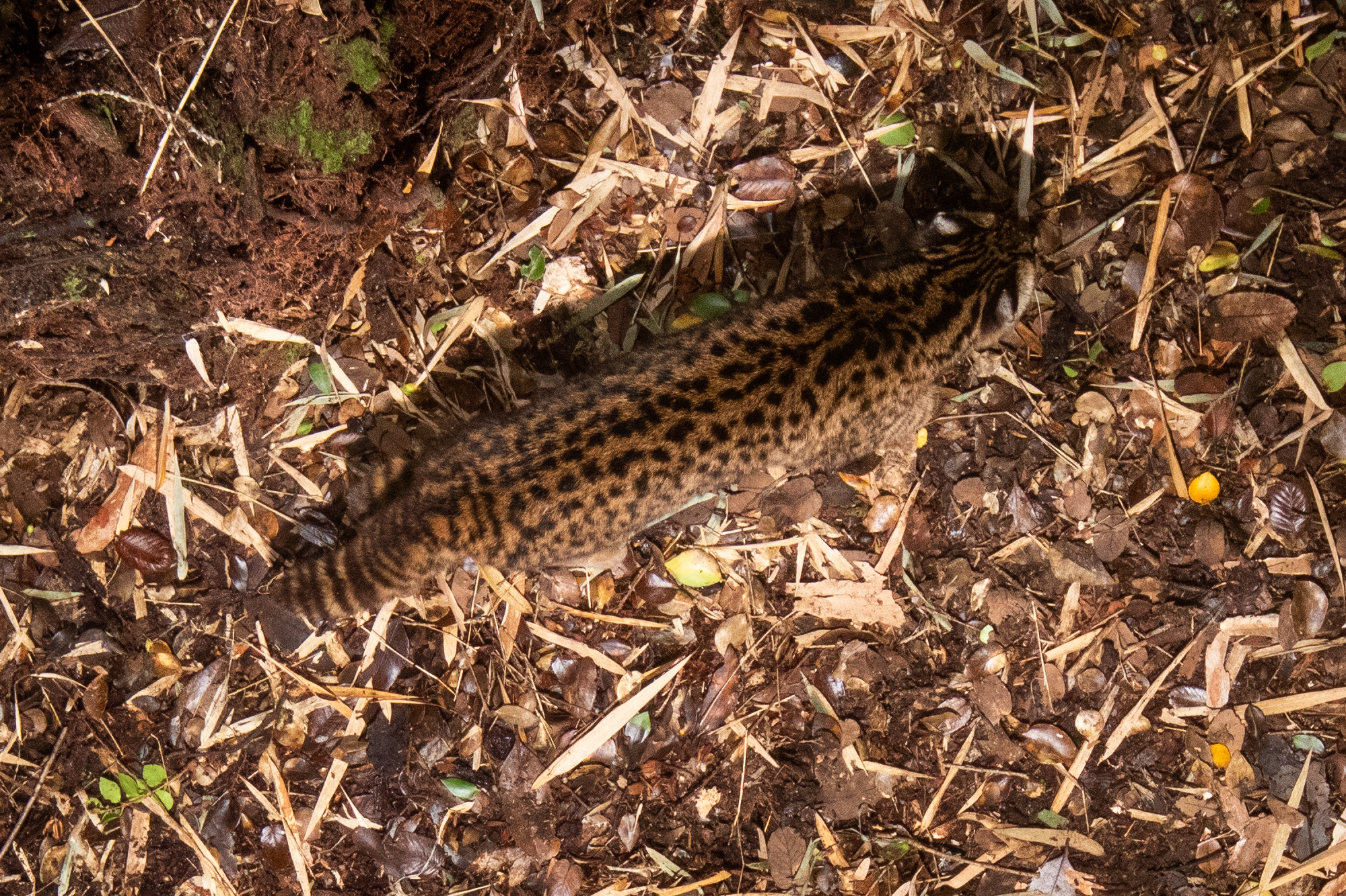
In Duque’s view, if funding allows, multiple cameras would be set up. “One in a zenith position and two lateral ones, as it is known that the markings of most cat species differ from one side to the other,” he said.
Galvez and his team also envisage the use of machine learning to optimize the identification process and possibly pick up more “subtle differences” that escape the human eye. “It’s also probably faster, but you do need to evaluate it,” he said. For Duque, developing such a method for estimating small cat populations is a “priority.”
Even though zenith placement camera trapping may not always make for the most thrilling wildlife photography, these small cat back snaps could well prove an important tool to conservationists fighting to understand and preserve South America’s smaller felids in the coming years. That’s if ongoing field tests prove the technique to be viable.
“I think now what we need to think about, and maybe other people will take up the challenge, is to design a [zenith placement] study to estimate density with a proper spatial capture-recapture design,” Galvez said. “We would also like for this to be evaluated in other species.”
Banner image: Camera traps set up to snap images of guiña from above, in a zenith position, can help identify them individually. Image courtesy of Eduardo Minte.
This article was originally published at Mongabay.com
 Sean Mowbray