Many already know Zelenogorsk — a manul, or Pallas’s cat, from Russia’s Novosibirsk Zoo — who became an internet sensation in 2022 after a video of him warming his paws on his tail was posted on YouTube. That clip has garnered more than 14 million views.
Many of the world’s 30-plus small cat species are relatively unknown, but thanks to its online fame as the world’s grumpiest cat, the manul bucks this trend.
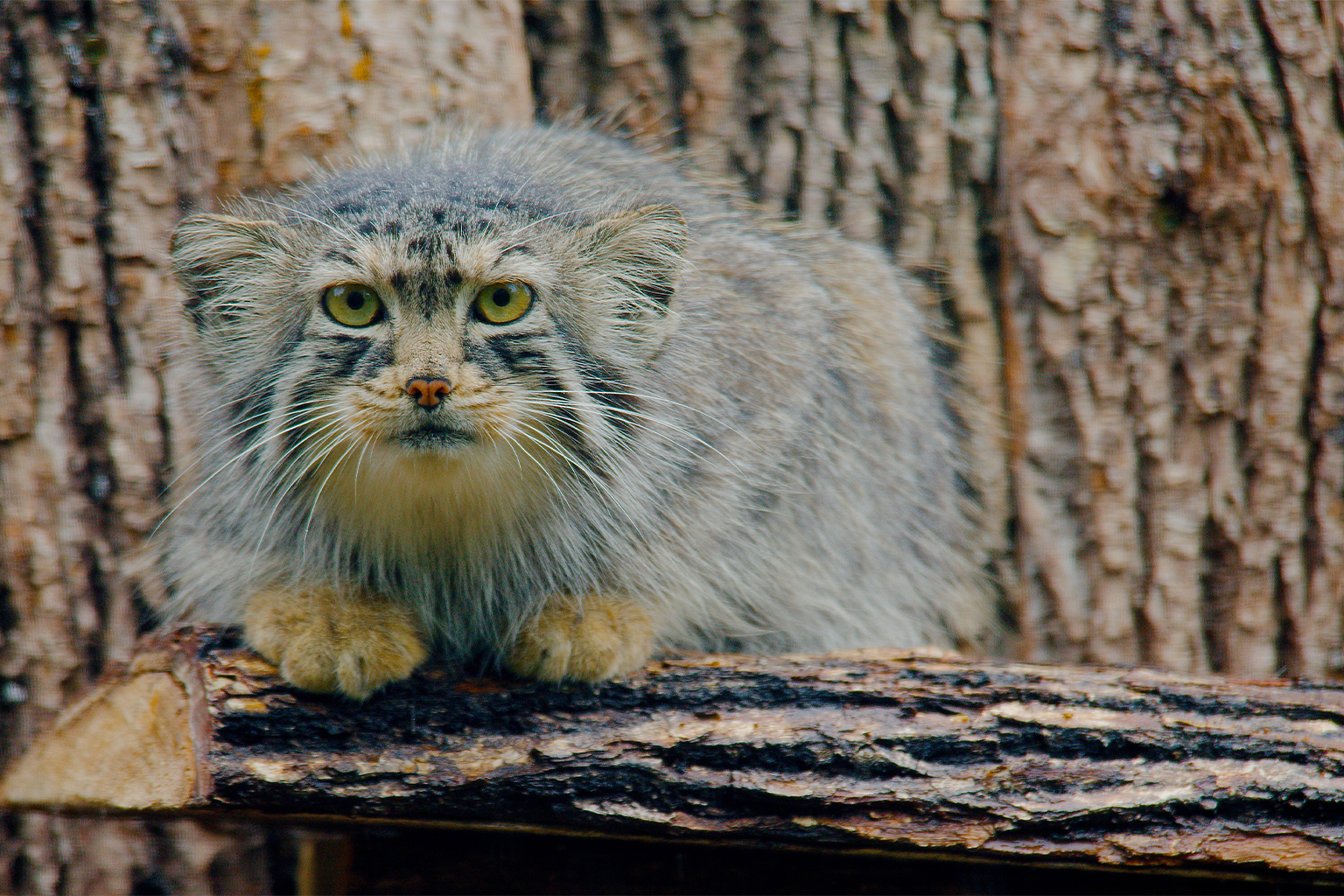
“Pallas’s cats are known for being these really cranky-looking animals,” said Jan Janecka, a professor of biology at Duquesne University in the U.S. “It’s almost like a meme, how the facial expression they have is just really unique and funny.”
But while the manul’s oft-miffed visage is well known, perhaps less so is the complex conservation picture it faces rangewide. Its “least concern” status on the IUCN Red List somewhat obscures troubling declines at the national level.
It inhabits a huge expanse of territory across South and Central Asia, including the Himalayas and on into the Caucasus and Caspian Sea region. Some countries — such as Mongolia and China — are considered strongholds, with healthy, if patchy, populations. But in the south and west, little is known about them.
“A lot of what we know is focused on these strongholds,” said Katarzyna Ruta, conservation manager at the Royal Zoological Society of Scotland and coordinator with the Pallas’s Cat International Conservation Alliance (PICA).
Elsewhere in their range, populations are often small, isolated and “very clearly understudied,” she added.
“Pallas’s cats may not be at an imminent threat of extinction in a next few years or so, but there are still many, many threats and difficulties that they are facing,” Ruta said.

Meeting the grumpy cat
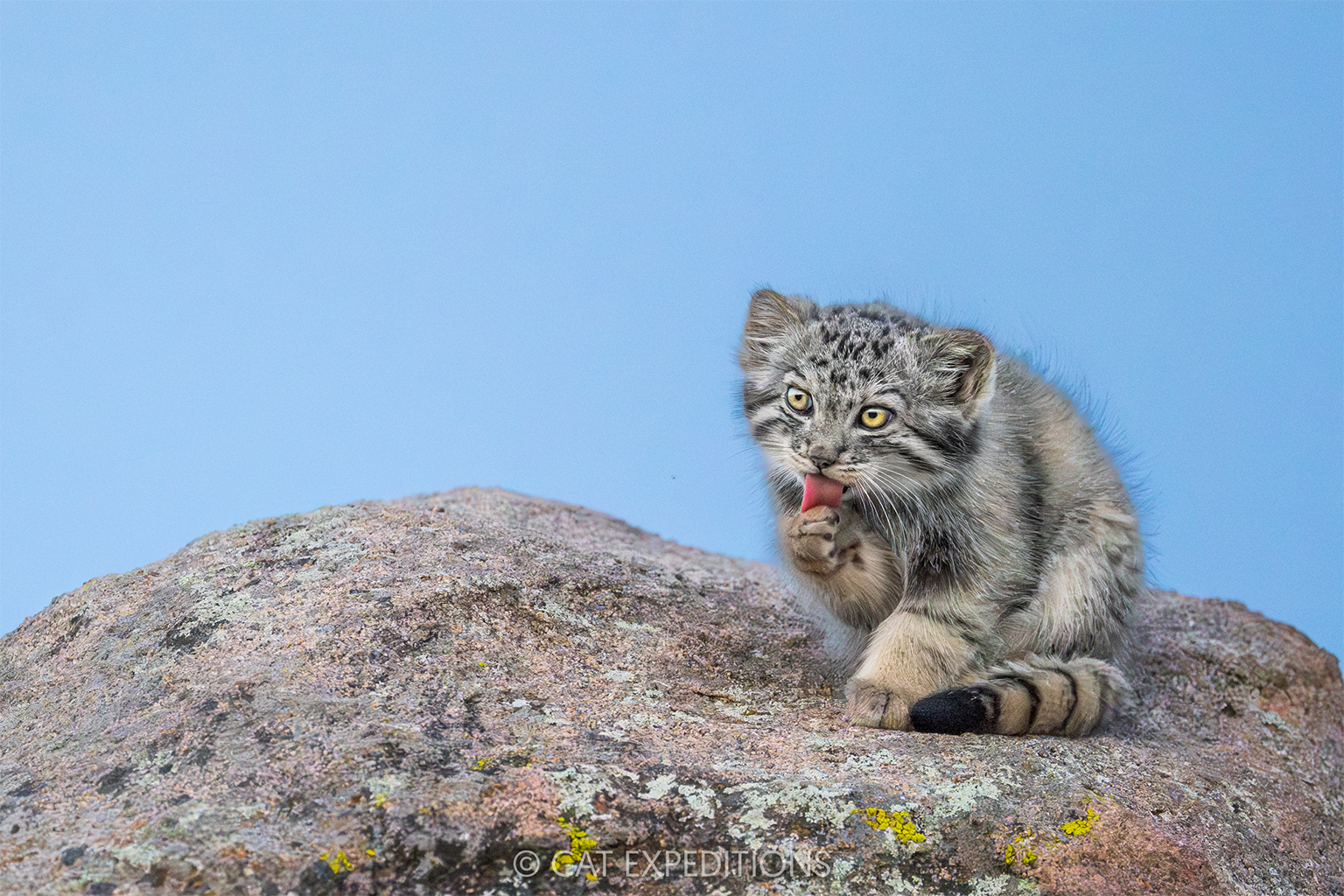
This cat is adapted for stealth rather than style and agility. Its thick fluffy coat — the thickest of any wild cat — acts as camouflage in the arid, rocky landscapes they inhabit. They often sport a grayish fur color, but in some drier parts of their range, it changes to an orange tint. “A little bit Garfield-like,” Ruta pointed out, referring to the lasagna-loving cartoon character.
When they encounter a predator, they flatten themselves, pancake-style, to avoid detection. Their relatively short legs mean they aren’t the greatest of runners, preferring to pounce and ambush their rodent prey, and they tend to avoid areas with deep snow, sticking to rocky landscapes and grasslands.
“They also like shelter, and they use burrows made by other animals,” Ruta said. They use fox dens and marmot burrows, as well as natural crevices, to sleep, hide and give birth.
This cat’s well-renowned facial expression is partly an adaptation. Unlike other wild cats, the manul’s pupils are round, allowing them to better spot and track prey, particularly during the daytime when they’re more active.

These stealth skills mean that manul are not easy animals to either find or study. It’s perhaps not surprising that many researchers haven’t seen the cat in the wild, and there are large gaps in knowledge of its behavior , abundance and habits, said Ehsan Moqanaki, an ecologist at the University of Montana in the U.S.
“This is a rare species. This is an elusive species. It’s not easy to observe.”
Understanding declines or increases in manul populations is also problematic, as they tend to naturally change alongside that of their prey, said Pallas’s cat expert Anna Barashkova, who works at the nonprofit Siberian Environmental Center in Novosibirsk, Russia, and chairs the Manul Working Group.
“As a result, manul abundance can vary greatly between years,” she wrote in an email to Mongabay.
“These fluctuations make it difficult to distinguish trends from temporary declines or increases, highlighting the need for long-term standardized monitoring across the species’ range.”

Monitoring the manul
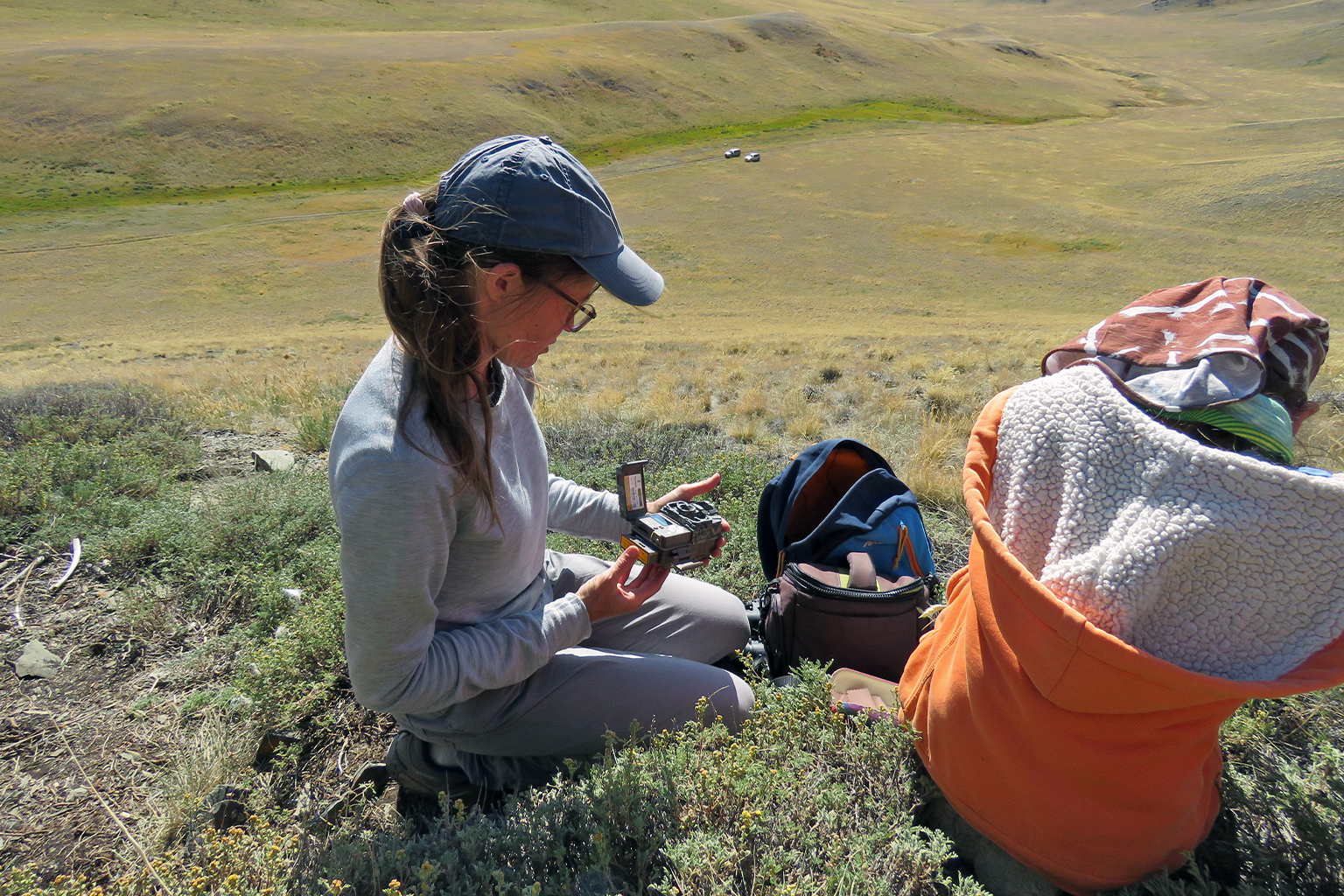
Like other small cats, much of what is known of Pallas’s cat populations is thanks to studies of big cats, in this case, snow leopards.
Earlier this year, researchers spotted a manul in Bhutan, the first record of the elusive cat in the country in more than a decade. It was last documented there — twice — in 2012 and hadn’t been seen since. Both “sightings” came from camera traps set for snow leopards.
But the lack of dedicated manul monitoring also means there are large gaps in data.
In early 2026, Moqanaki published the results of an expert survey by researchers and conservationists that study this elusive cat across its range. Numerous respondents reported that in several nations, there simply isn’t enough information about population trends to say whether numbers are stable, increasing or declining. In some countries such as Nepal, India and Pakistan, the cat’s situation remains uncertain, with only sporadic records.

Barashkova and her team are trying to change that. They’ve developed the Joint Manul Monitoring Program to keep eyes on populations in key locations. That currently includes central Kazakhstan; the Altai Mountains between Russia and Mongolia; and northeastern Mongolia.
“One of the main goals of the program is to distinguish cyclical fluctuations from long-term population changes — while improving our understanding of how manul populations respond to different environmental conditions,” she said.
The PICA team is also supporting efforts to kickstart long-term monitoring in other countries. One of those projects is in Turkmenistan, where the Pallas’s cat has been seen perhaps six times in as many years.
It’s hoped that expanding dedicated monitoring — rather than relying on “bycatch” documentation from other wildlife studies — can help clarify the conservation picture and target action where it’s needed most. “For this reason, standardized long-term monitoring across different regions of the range is critically important,” Barashkova said.


Adding bells to dogs
Moqanaki’s survey also shed light on perceived threats. Experts across the Pallas’s cat’s range identified feral and domestic dogs as a major problem. They kill the cats, compete for prey and increase the risk of spreading diseases, like canine distemper.
Development also ranked as one of the greatest challenges to manul survival, with agriculture and mining changing the landscape. Mongolia, for example, has seen an explosion in livestock numbers in recent years, Moqanaki said.
Environmental changes can trigger a trophic cascade, a kind of domino effect in nature. For example, declines in rodent numbers spell trouble, or if species that builds dens decline, potential housing is limited. “There’s basically a reduced amount of denning areas for them and that’s going to reduce their reproductive potential,” Janecka, a biology professor, said.
Other threats remain poorly understood. As a cold-adapted species, climate change is expected to impact the Pallas’s cat by altering its habitat and possibly reducing its prey. That’s already occurring, to an extent: As temperatures rise, higher altitude areas are opening to people, who are bringing livestock and dogs with them as they settle there, Moqanaki said.

Though limited in number, there are conservation efforts underway. The Pallas’s Cat International Conservation Alliance, for example, is supporting work with livestock herders in Mongolia to reduce the threat posed by dogs. One strategy is equipping canines with bells.
“The bell collars were surprisingly positively received,” said Emma Nygren, a project manager at the alliance. “Some of the herders said that it actually helps them find their dogs.”
Another project is trying to address manul hunting for their fur in Mongolia. In still another, a team in India is investigating the effects of tourism on the cat’s habitat. “They’re trying to assess whether that’s causing a problem to the local [Pallas’s cat] population and will possibly try to build some structures to help cats cross roads,” Ruta said.
Mass poisoning of rodents, the cats’ main prey, has likely affected them, too, compromising their immune systems or killing them, though these eradication efforts have diminished in some parts of their range, such as Mongolia and China.
“There is increasing recognition that these species play essential ecological roles, and that attempts to eradicate them can negatively affect entire ecosystems, including predators such as manuls,” Ruta said.
Barashkova voiced concern for their well-being. At the moment, it’s hard to highlight any major conservation wins for this species, she said.
Notorious, but to who?
A common refrain amongst small cat conservationists is that the 30-plus species are far less known than their big cat cousins. It’s often said that if people know about a small cat, they’ll care about it.
The Pallas’s cat offers an interesting case study. Its notoriety can, sometimes, bring support for local conservation efforts or fundraising. It acts as an important ambassador for steppe and mountain ecosystems, according to the PICA team. Zoos can bank on any manul-related content or advertising grabbing public attention.
“Anything to do with the Pallas’s cats just flies off the shelf,” Ruta said.
That grumpy cat charisma has also helped conservationists when engaging at the policy level. “We’ve been able to raise their profile among politicians and on the global conservation stage,” Ruta added.
Yet other experts question how viral views and online likes are benefiting the species and conservation action on the ground.
“Social media has definitely increased public awareness of the species, and today the manul is probably one of the best-known small wild cats globally,” Barashkova said. “However, it is still difficult to point to concrete conservation outcomes directly resulting from this popularity.”

Moqanaki believes much more work is needed to translate this popularity into support for conservation and scientific research in the cat’s range countries.
I think it’s maybe helped to highlight the need for information on the Pallas’s cat in countries outside its range, he said. But it’s also clear that within many range countries, knowledge of the small cat is limited. Outside of Mongolia and China, Moqanaki’s survey showed that many local people simply don’t know the manul exists — or can’t identify it from a picture.
“I think it would be good to have more information which is accessible to people who share the landscape with the Pallas’s cat,” he said.
Despite its notoriety on social media, nature’s infamously grumpy cat remains poorly understood, and in some places, deeply imperiled. But thanks to growing interest and the perseverance of conservationists, that is changing.
“[The] manul is, in many ways, a symbol of the vulnerability of the steppe and mountain ecosystems of Eurasia,” Barashkova said. “Protecting the species is impossible without preserving large-scale landscapes across multiple countries, which makes international cooperation especially important.”
Banner image: Pallas’s cat, also known as the manul, roam widely across Central Asia and are present in 16 countries. Image by Richard Gillin via Flickr (CC BY-SA 2.0).
This article was originally published at Mongabay.com

